
Anglesey woman credits pet hawk with helping cancer recovery
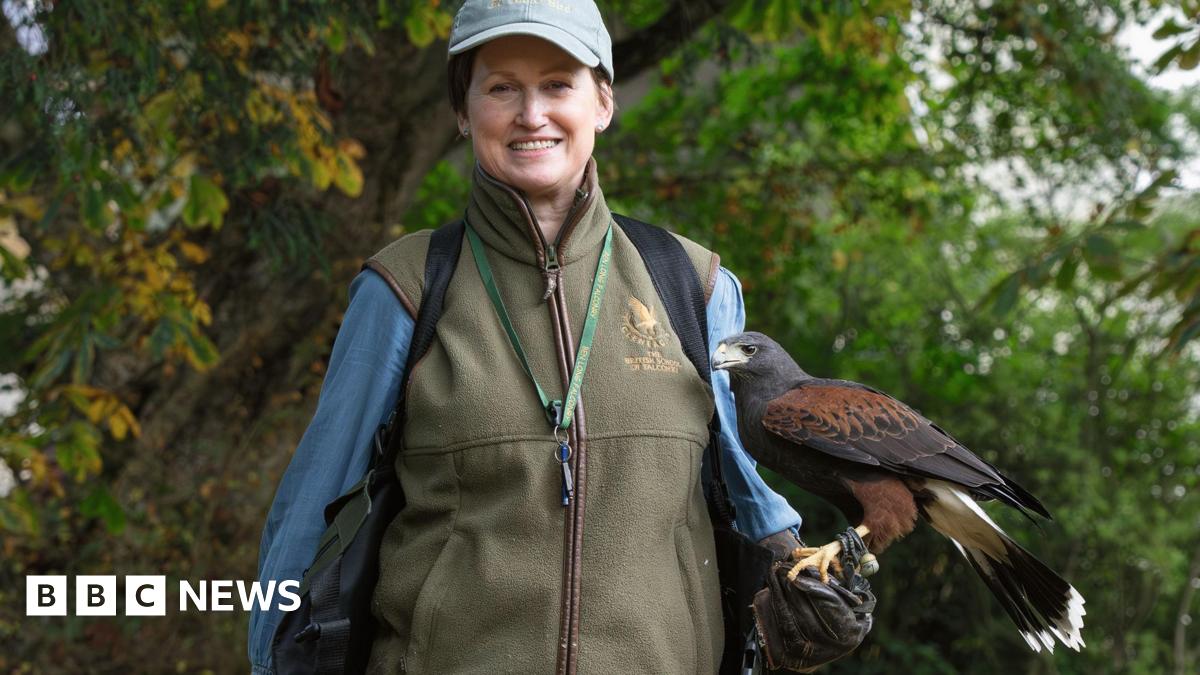
Six years ago, when the first Covid lockdown hit, many of us may have attempted a loaf of sourdough or even a weekly Joe Wicks PE lesson.However, Candida Meyrick took a different approach and adopted a Harris Hawk fledgling which she now credits with helping her re-identify herself after recovering from breast cancer.Thanks to the persistence of her youngest child George, who was eight at the time, she launched into a lifelong passion with a daily flight of her hawk, named Bird.Candida, who has recounted her adventure in a memoir Be More Bird, said: "Having cancer, you're put in the role of patient - passive, with things being done to you - to fly a hawk on the other hand is to say a very loud 'yes' to life, joy and your heart's desire."Candida and George dipped their toes into training a bird of prey at the Gleneagles Falconry Centre in early 2020.A few months later Bird hatched - the only viable chick of her clutch - and needed a home.Bird's proper pedigree title is Sophia Houdini White Wing and the hawk has a 1.5m (5ft) wingspan, is capable of horizontal flight in excess of 35mph (55km/h) and sight thought to be eight times greater than a human's.She requires at least two hours flight a day in search of prey, which can be anything from mice to pheasants, but a successful flight is less about a kill than honing Bird's skills.Training her hawk to fly in this way began the moment Bird arrived at Candida's Bodorgan Hall estate on Anglesey in 2020."This cardboard box arrived, bristling with energy and whilst it didn't weigh much, it was palpably full of her presence - a definite predator, whose distant ancestors are dinosaurs."I remember her arrival so clearly - the way she stamped briefly in the box - making her presence known."The 11-week-old fledgling was "punk-looking", with "feathers sticking up all over the place, but with talons which seemed incongruously outsized".Then began the process known as manning - getting her to accept sitting on the glove - which was done with the help of a falconer friend Richard Boyce.Indeed, Bird did come off worst in a scuffle with a stoat, injuring her leg, and while Candida sought veterinary advice, she said Bird found the best way to cure herself."While she had a wounded leg, she sought out wild thyme and white willow, in other words a natural antiseptic and painkiller, but I had no idea how a hawk would instinctively understand that - up until now she'd only ever eaten meat."Candida hopes her passion will live on long after both her and Bird."Bird was in many ways my son's vision, but it reignited a lost spark from my father, who painted beautiful bird studies."My children are now focused on their own passions - tennis, physics, geopolitics - but I love the thought that the seed of falconry is sown."Hopefully, if one day they decided they'd like to have a hawk with their own children, I'd like to think they could call on my knowledge and enthusiasm to help them."


Most Popular


Pepperdine University Athletics
19 hours ago


Senegal's World Cup jersey won't have two stars
18 hours ago