“Not content to be number two forever”: For club executive Carsten Cramer, two opportunities are on the cards at BVB
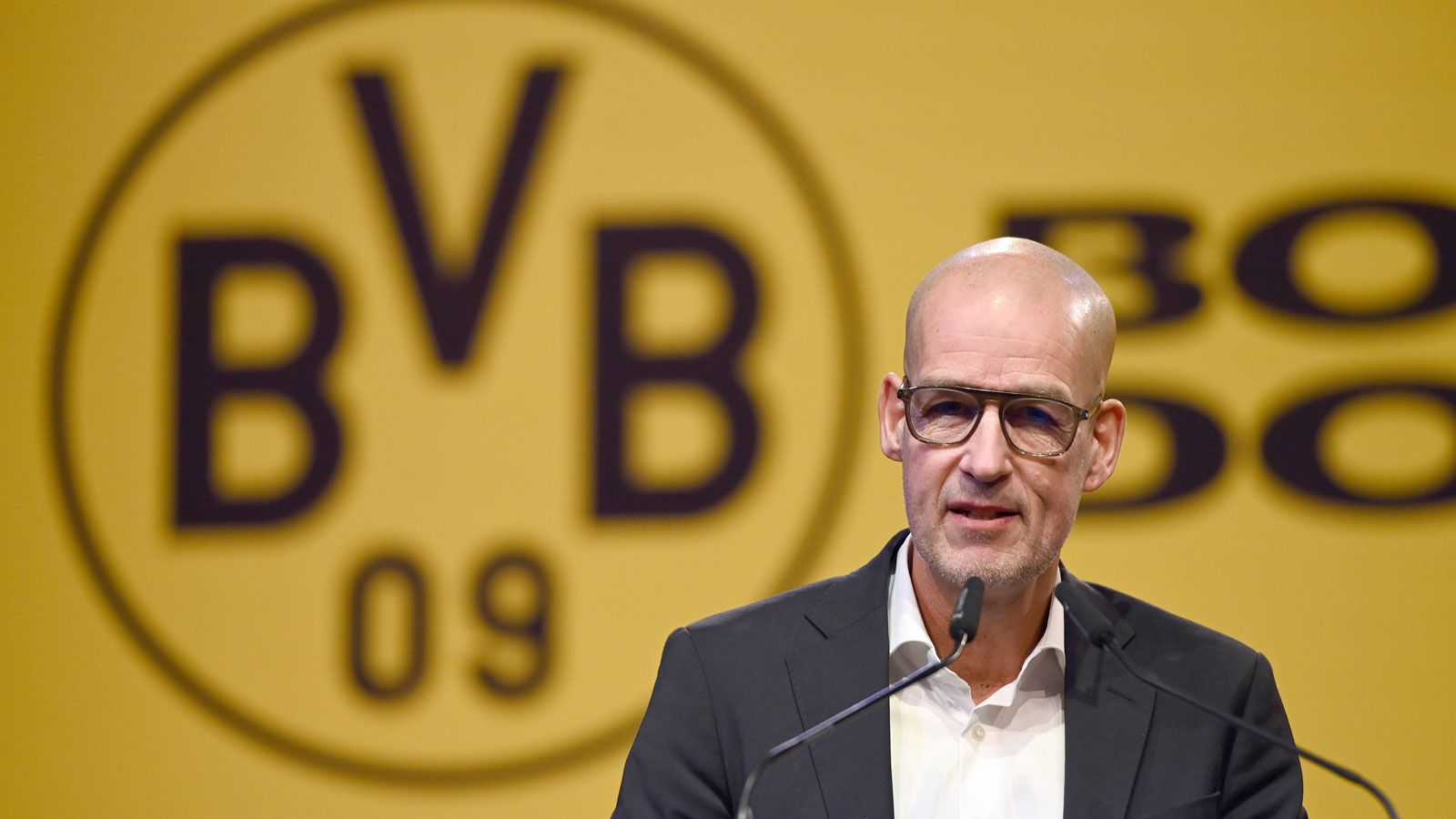
Recent months in Westphalia have been turbulent. A former high-ranking official was ensnared in an abuse scandal, while the presidential contest between incumbent Dr Reinhold Lunow and challenger Hans-Joachim Watzke descended into ugly mudslinging. On the pitch, the club had just endured a largely disastrous season. Cramer has never tried to sugar-coat these negative headlines. He has always spoken in no uncertain terms and made it clear that BVB had not presented itself in a good light.Cramer made these remarks around two weeks ago, shortly before Borussia Dortmund introduced their new sporting director, Ole Book. The swift appointment of a second-division executive with no top-flight experience took many by surprise.Book’s first appearance lasted just under 40 minutes. Cramer spoke twice during the event—and delivered remarks that had not been heard with such clarity for far too long. Taken together, they amounted to a telling statement about the ambition with which Cramer intends to approach his new role, and with which he has been working ever since he joined BVB in 2010.“Over the past few weeks and months, we have shown that we are willing to muster a great deal of courage and are keen to make Borussia Dortmund even better,” Cramer stated. He then added that he was “not a big fan of always looking to the past, because looking back too much eventually leads to a stiff neck”.Whether intended or not, the remark could be seen as a gentle dig at the often backward-looking Watzke, who has frequently cited the club’s decade-old successes instead of crafting a fresh, forward-looking narrative.Following the departure of Sebastian Kehl, Cramer explained that the club aims “not just to press the reset button, but to launch a major update”. The father of four views this bold move as proof “that we at Borussia Dortmund have big plans”. He adds: “I get the impression that, in Ole, we’ve brought in someone who embodies the new BVB. He’s the missing piece—and he fits perfectly.”This is the gist of Cramer’s remarks. Almost halfway through a season in which Borussia are racking up points in the Bundesliga as they haven’t done for many years, and unlike in the two previous seasons are on the verge of comfortably qualifying for the Champions League, the club’s director is calling for a new BVB. This is certainly remarkable, and given recent developments, urgently necessary.Cramer has clearly heard the familiar criticism that the club too often cooks its own broth, lacks creative squad planning, has lost identity and seen supporter engagement wane. Now he is pulling the strings and implementing change without fanfare.The move feels both invigorating and inevitable. Cramer has always been a man of action: his unconventional career path shows he is unyielding, relishes a challenge and thinks progressively.He began by selling table-tennis gear in a sports store, then moonlighted as the stadium announcer for Preußen Münster and Hamburger SV. Although he studied law, his passion for marketing and sales propelled him into professional football, where he has climbed the career ladder with steady strides.Cramer is a persuasive salesman: not only is he gifted with words, he also shows genuine empathy and, unlike Watzke at times, never comes across as aloof. Since he arrived in Dortmund, the club has attracted an ever-growing pool of sponsors willing to dig deep into their pockets. Dortmund’s annual turnover now comfortably exceeds half a billion euros, with a significant share coming from Cramer’s commercial divisions.That growing clout has now propelled him into Watzke’s old chair. Since taking the helm, Cramer—who stood his ground amid fan criticism over a couple of unconventional shirt designs—has gotten to work with the same inventiveness he has always shown.Cramer had barely settled into his role when long-serving director of communications Sascha Fligge was shown the door. In women’s football, his pet project, Cramer signalled BVB’s ambitions by appointing the highly decorated Ralf Kellermann as sporting director and recruiting top scorer Alexandra Popp. That was followed by the switch from Kehl to Book. Infrastructure is also being upgraded: the first-team training centre is being expanded, and the women’s department is getting its own facility with training pitches, set to sit adjacent to the senior squad’s wing.Cramer, who sees himself as a “catalyst”, aims to rekindle the buzz around BVB that characterised the Jürgen Klopp era—while ultimately forging his own identity. His bold, sometimes unconventional approach also extends to infrastructure: the men’s training centre is being expanded, and the women’s section will gain its own facility with pitches adjacent to the first-team area.Ultimately, success on the pitch will be the ultimate judge. Yet the club’s ecosystem is primed for a new BVB—some would say it is craving it. Cramer signalled as much in his interview with Westfälische Nachrichten: “Our ambition is not to be number two permanently. To achieve that, we must have this hunger, this obsession with winning matches. That applies throughout the club, in every department. You can’t even lose a legends’ match in the black-and-yellow shirt.”Cramer now has two opportunities before him. In charge of a major club, he can implement long-overdue reforms and re-establish a clear, overarching vision at Borussia.Last May, the large fan alliance “Südtribüne Dortmund” published an open letter that, despite the seemingly successful season finale, labelled the club “strategy-less” and accused it of “perpetually fixing the same old mistakes with the same old methods”.Ultimately, Cramer will be judged on results on the pitch and on how sporting director Book—whom he helped recruit—reshapes the squad. On a personal level, the unpopular executive can also rebuild his reputation among sceptical fans.He is well aware of this and made that clear at Book’s presentation: “We must embrace change and take unconventional measures, which may well involve bringing in new faces. That starts with me.”Cramer’s start has been promising, and the coming months are eagerly anticipated. His actions, backed by his words, have already brought a breath of fresh air to the club. Much has been set in motion, and to build genuinely on the existing foundations, the pace must be maintained.



Most Popular

#8 Women’s Lacrosse Hosts #14 Army in Top
7 hours ago
All eyes on Samson and Gaikwad as CSK seek reset
7 hours ago