How Victor Wembanyama and France are starting an international hoops takeover
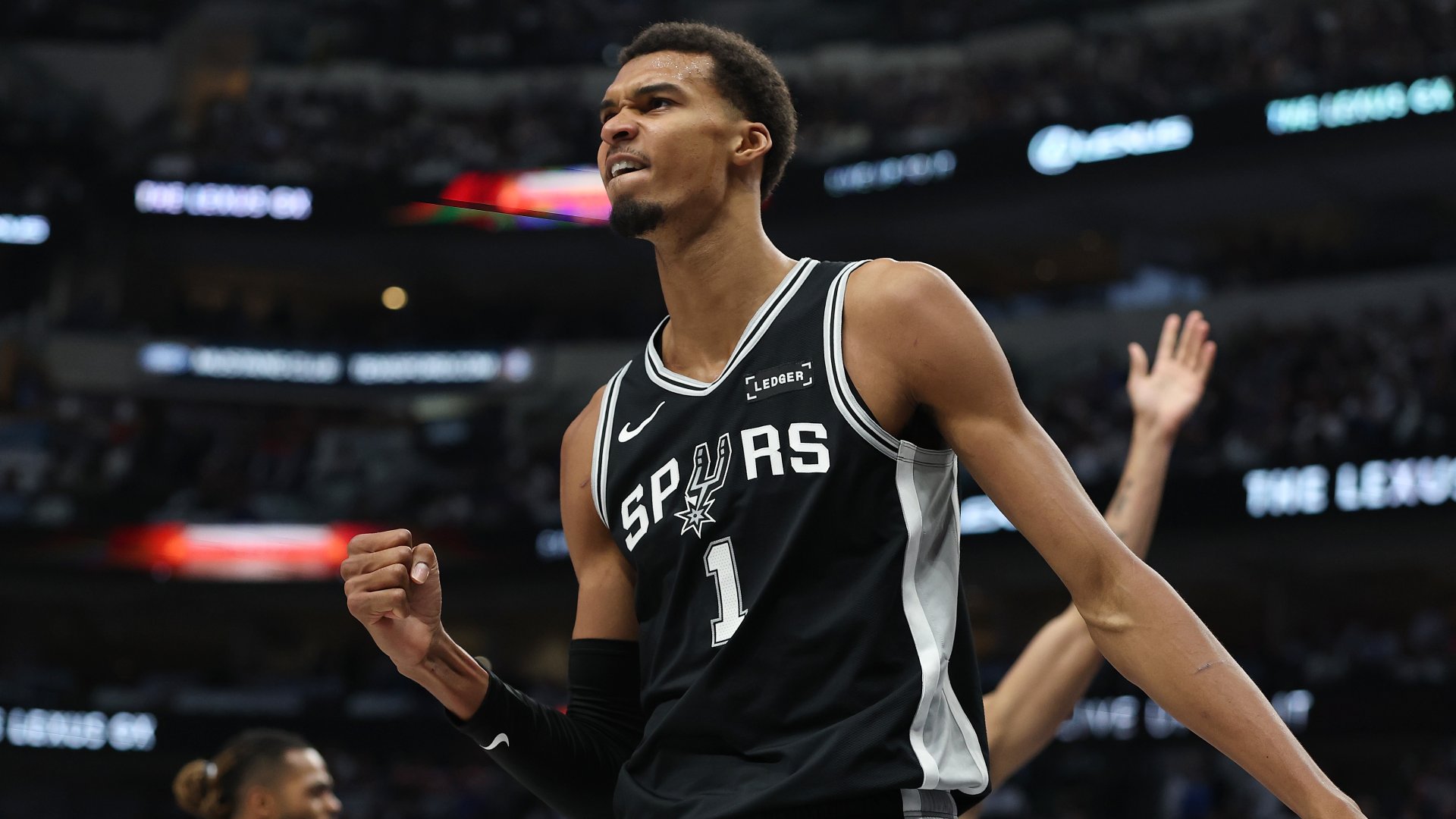
France has long been famous for its sweet and savory creations made of flour. When the country tried its hand at producing basketball talent three decades ago, the initial result was best described by a bakery term — turnover?Or more accurately — jump-over?That’s what Vince Carter did legendarily in September of 2000 when the Team USA member executed one of the most iconic moments in Olympic basketball history. He soared, and soared, and soared some more off a single bounce and easily cleared a 7-foot-3 defender who stood tall near the rim.The ensuing dunk was a career-defining step forward for Carter. As for the posterized victim and the country he represented, it was a step backward. He was Frederic Weis, who, in the 1999 Draft, was the first Frenchman taken in the first round (by the New York Knicks) and only the third ever drafted.Weis was a respected international player and a French basketball pioneer, but his career never recovered from that earthquake. He never played in the NBA and his agent, perhaps wisely, encouraged him to stick to playing in Europe.As for France: The basketball rebirth was slow at first, then gradual, now ballistic. In a coincidental comparison, the face of national basketball once again is perched on the body of a 7-footer — this time San Antonio Spurs star Victor Wembanyama, the young leader of a French Revolution, and good luck dunking over him.This development comes here at a shifty era for the NBA. The league has recognized the richness of international basketball and is using it to revamp the All-Star Game. This year, for the first time, it will be USA All-Stars vs. World All-Stars, with the twin purpose of inspiring competition and saluting globalization.How did the NBA arrive here, where the last United States-born Kia MVP winner was James Harden in 2019, where multiple international players are making All-NBA teams and being chosen high in the draft over American hoopers?And guess which country finds itself among the world hoops powers?France will be represented in the All-Star Game by Wembanyama, but multiple others might follow in the ensuing years. That’s because the French population in the NBA is expanding.“They all have a chance to leave a mark in the NBA,” said Nicolas Batum of the LA Clippers, one of the initial waves of French NBA players. “What we have is very promising.”The ascent of France, while not totally unexpected, comes at the expense of other countries that saw their runner-up status to the U.S. on the Olympic stage leapfrogged. Here’s the historical timeline:· Soviet Union: Before the drastic governmental changes, the country now known as Russia was a strong World No. 2, even after the controversial 1972 Olympic gold medal win. Among the few to crack the NBA and have a successful career was Arvydas Sabonis, father of Sacramento Kings star Domantas. However, Arvydas was an old rookie when he arrived in 1994-95, sporting bad knees and clearly past his professional peak.· Yugoslavia: Before the 1992 splintering of the country, this was a powerhouse that produced, among others, Vlade Divac, Dražen Petrović and Toni Kukoč. But, no more.· Lithuania: Tie-dye jerseys inspired by the Grateful Dead helped make this small country splashy and popular following its departure from the Soviet Union, with Hall of Famers Sabonis and Sarunas Marciulionis being the best of a limited bunch.· Spain: The Gasol brothers (Marc and Pau), Ricky Rubio and others made Spain a juggernaut post-1992 Barcelona Olympics and for another decade. Now and then, a talent or two from Spain will enjoy a decent NBA career.· Brazil: Oscar Schmidt, a Hall of Famer, never played a minute in the NBA, and too bad for that. The gunner would’ve been great coming off someone’s bench. Nenê had a solid career, at least and the country, overall, was decent back in the day.· Argentina: Hall of Famer Manu Ginóbili became one of the great sixth men in NBA history. He and Luis Scola had a spirited run through international hoops, but the country has simmered since.· China: While Hall of Famer Yao Ming obviously was a game-changer for China, a country that worships basketball and hoops culture, he didn’t inspire a mass number of subsequent stars.· Germany: Dirk Nowitzki created awareness for basketball and had German kids practicing fallaway one-foot jumpers after his Hall of Fame career. A trickle got a taste in the NBA.· Serbia: Nikola Jokić is on pace to become the best international player of all time.· Australia: While Luc Longley, Andrew Gaze and Andrew Bogut formed the core of Aussie ball, a scattering of native players were the sons of former NCAA players who spent pro careers in Australia and stayed to raise families.· Canada: The concentration of talent in Toronto alone was launched in part by Vince Carter and his days with the Raptors. That said, these Canadians — Steve Nash, Shai Gilgeous-Alexander and the rest — are/were mostly Americanized by immigrating to U.S. high schools and/or playing NCAA basketball.· Africa: Taken individually, a few countries on this continent had moderate success in the NBA. From the collective, however, and with improvements in coaching, Africa has exported its share of stars: Hakeem Olajuwon, Dikembe Mutombo, Manute Bol, Joel Embiid, Pascal Siakam and others.The first French superstar wasn’t WembyMeanwhile, the country with the fastest-growing concentration of NBA players is seeing its number come up on the international roulette wheel. France has 19 players currently on NBA rosters or in the NBA G League. Twelve were first-round picks. Seven were lottery picks in the last three drafts.Two — Wembanyama and the Atlanta Hawks’ Zaccharie Risacher — were No. 1 overall picks. Wembanyama will start in the All-Star Game for the team of internationals.That influx of talent indicates the French fraternity is expanding and poised to make a significant impact with a handful of NBA teams. And this can only inspire athletic kids from back home to seriously consider basketball and keep the pipeline open.“French prospects,” said Wemby, “are popular right now.”This wave began with Tony Parker. Born in Belgium to a Dutch mother and American father, Parker was raised on hoops in France and as a teenager rapidly became the face of a new generation. The Spurs drafted him 28th in 2001 — he lasted that long because of typical skepticism about European players, especially guards — and the rest was history.“He opened the gates for us,” said Batum, now in his 17th NBA season. “And we benefitted from that.”Parker lasted 18 seasons, won four championships and a Finals MVP and is a Hall of Famer.“I’m very proud to be one of the pioneers,” he said recently. “When I see the evolution, hopefully we can build from that and keep going with French basketball in the NBA and in Europe and all the great things that can happen. We can be a great place for basketball for a long time.”Over the next few decades, French players made either a marginal or lasting impact. While most were role players, a handful enjoyed long careers, including Batum, Boris Diaw, Evan Fournier, Ronny Turiaf and Joakim Noah. Noah was born and raised in New York but repped France in international play because of his father, French tennis star Yannick Noah.“When we go back home in the summertime,” said Batum, “we’re working out with the young guys and getting them ready.”The future looks better than the past because of the number of young players on the NBA roster. There’s even a decent chance that France could be the gold medal favorite in the 2028 Los Angeles Olympics. Remember, Team USA desperately needed Stephen Curry’s late-game heroics to hold off France in the gold medal game in 2024.“I don’t know if we will be favorites,” said Risacher, “but anything’s possible. I can’t wait to go out and compete with my guys. We believe we can do great things, not only in the Olympics but in the NBA.”Much depends on Wemby, already an MVP candidate and the centerpiece of the turnaround in San Antonio. He’s a national hero and is spreading basketball awareness in a country that isn’t just about soccer anymore.Parker said, “He can be the face of the NBA in two or three years. He can be the best player in the league. That’s great for us, for our national team and can only inspire the next generation.”Batum: “He’s different. Because of Vic, we get exposure. He allows us to show the next generation that you can make it. You don’t have to be Vic. You can be a different type of player. We have an MVP-caliber player, some who might become All-Stars and role players.”France suddenly has all of that, and maybe more in the future. For now, one French 7-footer is a big reason the NBA changed the All-Star Game format. Helped largely by France, the World is ready to show the world that it’s ready for the Americans.“I think it’s going to bring something new to the All-Star Game,” said Wembanyama.* * *


Most Popular

Peter Squires obituary: England rugby winger
14 hours ago