Estevao: The rise of Chelsea's teenage Brazilian star
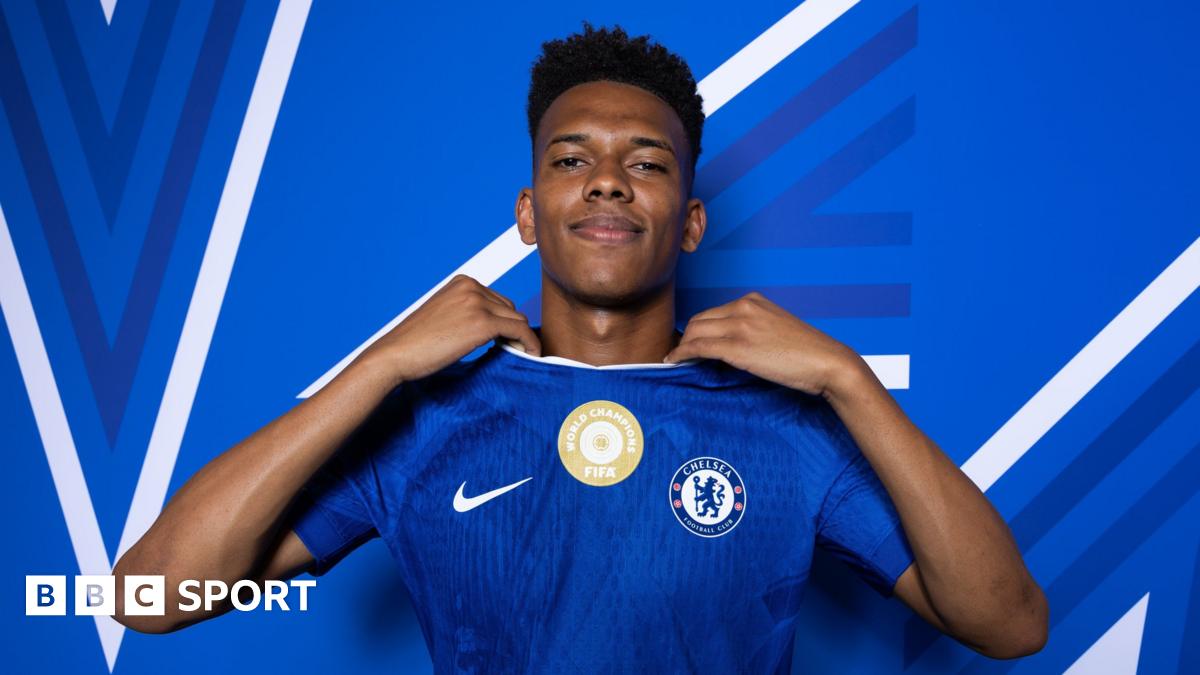
He shifts his weight, a sway of the hips, one touch, another, a slight change of direction - and he is gone.A move that has become increasingly familiar.It lasts only a fraction of a second, but inside those movements lies an entire story of personality, identity and obstacles overcome.And one of its first chapters began on a dirt pitch in the interior of Brazil, about 250 miles (400km) from Sao Paulo.In the city of Franca, a three-year-old Estevao was already trying to join a local football school.The problem was that the youngest age group started at five. His father, Ivo Goncalves, asked the owner for a chance - and that was how Sergio Freitas, known as Serginho, gave Estevao the first football opportunity of his life."When Estevao got on the ball it was astonishing, it wasn't normal," Serginho told BBC Sport. "He already had close control, the ability to run with it, something he still does today."I looked at my business partner and said: 'Mate, look what's just landed in our hands'."Chelsea fans have been saying much the same ever since Estevao, now 18, arrived at Stamford Bridge in the summer.From the start, Estevao attracted attention - and discomfort."Stop being a coward and take Estevao off, it's not fair," rival parents would complain."He was far superior to the others. So we took him off so it didn't look bad for the other children. Then we moved him up an age group, under-nine, under-11, and he stood out just the same," said Adair Junior, one of his first coaches and better known as Juninho.Self-imposed pressure has always been part of who he is. After training, he stayed behind working on fundamentals with his father, a former goalkeeper for a local team."Ivo was a goalkeeper, but he always struck the ball really well and demanded the same from Estevao," recalled Serginho."And Estevao has always been a perfectionist. They'd hang a bib in the top corner of the goal and tell him he had five shots to knock it down. Until he did, he wouldn't stop, even if we asked him to."The 'terrao' - essentially a dirt pitch - where he grew up completed his football education."Most of our training sessions were there," said Juninho. "It's a fast surface that forces quick decision-making and tight control."His tight control was a skill also shaped against the first 'defender' he ever faced - a Rottweiler."Estevao would play with the ball, the dog tried to get it, and he'd keep dribbling past the dog," said Serginho. "Try playing with a dog - it'll take the ball off your feet."Estevao's routine always revolved around religion and family. In the church next to their home, he discovered another talent: the drums."He learned to play drums so he could play in church with his dad. They are very close," said Serginho.His father's dream had always been to open a church, but he never had the means.On the Brazilian podcast Polo in Off, he said that one day, while he was praying inside the church, a girl knocked on the door and said: "Your son, he's the one who will give you your church."At the time, he was single and had no plans to have children.Years later, when the boy was born, he remembered those words and named him Estevao, meaning 'crown' after a passage in the Bible about David and Solomon.His mother Etienne Almeida, meanwhile, works in education and has always demanded responsibility on and off the pitch."She always said a player without education doesn't understand his own development on the pitch," added Serginho."An intelligent student becomes an intelligent player. Ivo looked after what happened inside the white lines. Etienne, outside them. The family has always been very present and very clear-headed."At the age of eight, a businessman from Minas Gerais watched one of Estevao's training sessions, filmed it and sent the footage to Cruzeiro. The club wanted to see him immediately.Many people thought it was madness, but Ivo, convinced of his decision, packed everything into a small truck and drove nine hours with his son to Belo Horizonte. At that moment, the family left everything to follow the dream of an eight-year-old child.Because of his age, Estevao was not paid at that time, and the family lived on the edge."We didn't go hungry, but it was close," Ivo said on the Brazilian podcast Polo in Off.The turning point came at the Go Cup, one of Brazil's main youth tournaments, where Estevao became the standout player.Cruzeiro responded by creating a new futsal youth category specifically for him, ensuring he had the ideal environment to develop. At 10, he became the youngest athlete in Brazil to sign a contract with Nike.When he eventually left Cruzeiro, several clubs made offers, but he chose Palmeiras.Joao Paulo Sampaio, head of the club's academy, explains that their work focuses on preserving the instinct at the heart of Brazilian footballers."Between taking a player on and making the pass, we encourage them to take the player on," he said. "We want to bring them back to their roots of playing in the street."The method produces versatile players."Here, every boy is expected to master at least three roles. Take Estevao, for instance: he plays as a number 10, but also excels as a seven and an 11."After winning multiple titles in the academy, he made his first-team debut in 2023, aged 16 - fittingly, against Cruzeiro. He never looked back.Having established himself in Palmeiras' first team, Estevao continued to attract attention - now from far beyond the borders of Brazil.At the end of the 2024 Brazilian league season, after a match against Fluminense, he met Thiago Silva.Fresh from ending a four-year spell at Chelsea, Silva told BBC Sport about their conversation - and the message he decided to give him."The experience of playing for Chelsea and living in London will be unforgettable for me and for my family," he said."I told Estevao that the club likes to work with and develop young players and that he could use that to make the most of the opportunity."Estevao and his family felt the club genuinely wanted him, believed in his potential and were offering a clear pathway for his development - something especially important for a player so young."I kept telling him that English football is one of the most competitive there is," said Serginho. "Estevao does not back down. I knew he would adapt."Phelipe Leal, who coached Estevao with Brazil's youth national teams and gave him his first under-17 call-up, agrees: "The natural route is usually Barcelona or Real Madrid. But Chelsea had a clear project based on signing young players."It was the perfect match."In June 2024 Chelsea announced the signing of Estevao - but he would stay in Brazil for another season before making his move.The year between agreeing that move and completing it was not without its bumps. At the start of 2025, Estevao missed a decisive penalty against Corinthians, Palmeiras' biggest rivals.The moment hit him hard.Writing for The Players' Tribune, he revealed that after the game he received a message on Instagram from Neymar, his childhood idol, who told him to keep his confidence, that he would miss many more penalties in his career, that it was part of the game - and that what really matters is how he reacts.Neymar finished by telling him that he would be "the next genius of Brazil".Phelipe Leal shares that view: "Estevao reminded us a lot of Neymar and Coutinho, two hugely talented players in youth football, surrounded by big expectations, who managed, as professionals, to do something very similar to what they had done at academy level. And Estevao always gave us that same feeling."He floated across the pitch, it was remarkable. And I can say that, for me, after Neymar - respecting all the players Brazil produces - Estevao is the next one who can be truly out of this world, with a real chance of fighting to be the best player in the world."He embodies Brazilian football."In and out of the team after making his Chelsea debut on the opening weekend of the 2025-26 Premier League season, his big moment came against Liverpool in October.On as a 75th-minute substitute, Estevao scored a last-minute winner to beat the champions. Even Enzo Maresca ran to embrace him."A classic moment. He comes on and scores a goal like that, it shows a lot of personality," said Juninho.More big moments followed. Arguably the biggest yet came in a Champions League tie against Barcelona - and Lamine Yamal - just one month later.It was billed as the battle of the two teenage wonderkids - and for once it was the Spain winger who found himself overshadowed, cast out of the spotlight.Collecting a pass from Reece James, Estevao cut inside, turned Alejandro Balde inside out and then sent a rasping drive into the roof of the net past goalkeeper Joan Garcia.But it was so much more than just the goal - Estevao played as if it were nothing more than a children's kickabout.That lightness comes from his upbringing."His father always told him that, to become a professional, he would have to give up a lot of things. His childhood, in the end, took place on the pitch," said Serginho."He has always been passionate about playing in a full stadium. For him it has always felt very natural. Why? Because he is happy. He plays with happiness, he plays smiling.His father's advice was simple: responsibility with joy.Estevao's talent has been attracting attention since very early on."The fence around the pitch would be packed with people just to watch him train. On matchdays, people came from outside the region. Since he was little, he drew a crowd," says Juninho.Before his move to Chelsea, the academy was even overrun."He walked in while we were training and people from outside started coming in, faces I had never seen in my life," added Juninho."We had to take him into the office and close the door because there were so many people inside."That influence became a tool for coaching."Sometimes a kid does not give everything. We say: Estevao was not like that. Estevao dedicated himself, he committed, he did not complain. That motivates them."Today, the wall of the Tok de Bola academy carries a large image of Estevao.Juninho uses it often: "You want your face on the wall? Then train, commit. Estevao is a role model for everyone here."




Most Popular