SLC president Shammi Silva, executive committee members resign
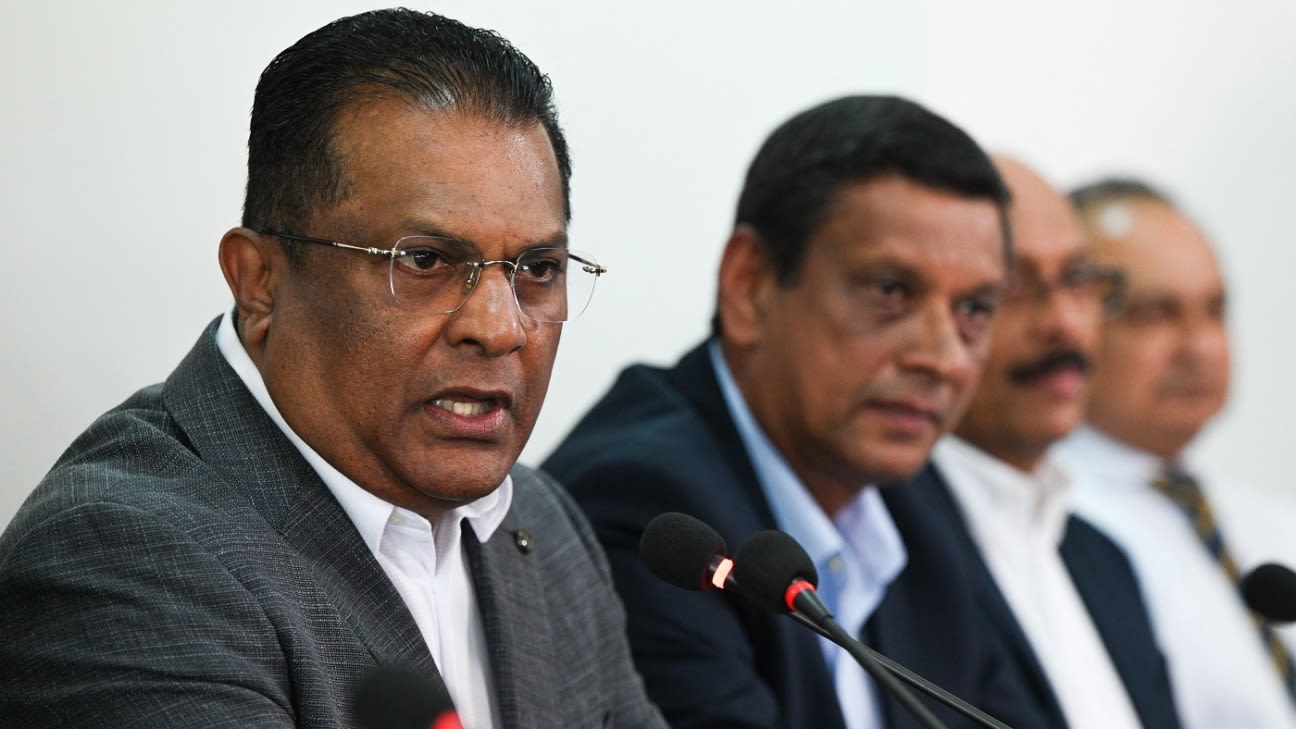
The Sri Lankan government is now likely to appoint an interim committee, which is expected to have former cricketers Sidath Wettimuny and Roshan Mahanama in itMadushka BalasuriyaPublished: Apr 29, 2026, 6:40 AM (4 hrs ago)Sri Lanka Cricket (SLC) president Shammi Silva and the board's executive committee members officially resigned on Wednesday, a move which had been rubber-stamped at a special committee meeting the day before.The development reportedly came after a request from the country's president, Anura Kumara Dissanayake, who is understood to have met Silva last Friday to negotiate a cordial exit amid mounting public pressure and ongoing allegations of financial irregularities.The government is now likely to appoint an interim committee, which will be headed by former member of parliament Eran Wickramaratne. Prominent former cricketers Sidath Wettimuny and Roshan Mahanama are also tipped to be given roles in the new set-up to fast-track reforms, though nothing has been made official yet.RelatedKirsten hopes Sri Lanka keep 'progressing and improving'"The president of Sri Lanka Cricket, Mr Shammi Silva, has tendered his resignation from the post, effective today," an SLC media release said, adding that the office-bearers and members of the executive committee had also tendered their resignations and the decisions had been communicated to Dissanayake and sports minister Sunil Kumara Gamage.Silva first assumed the presidency in February 2019, succeeding Thilanga Sumathipala, who himself was no stranger to allegations of corruption. Initially seen as a Sumathipala loyalist, Silva went on to consolidate his position, winning four consecutive terms, three of which were uncontested.During his seven-year tenure, while the men's and women's teams secured Asia Cup titles, consistent success has remained elusive. The men's team suffered a sharp dip in its ranking, as well as deflating exits at the 2023 ODI World Cup (finishing ninth) and the 2024 and 2026 T20 World Cups - the latter co-hosted by Sri Lanka. And even the appointment of Gary Kirsten as head coach of the men's team earlier this month has failed to quell demands for a leadership change.The most significant threat to this transition is the ICC's zero-tolerance policy toward government interference in cricket administration. The ICC has historically viewed any state-appointed body - whether an interim committee or a competent authority - as a breach of Article 2.4 (D)Silva has often talked up SLC's status as the country's richest sports body, one which achieved record revenues despite the country's broader economic challenges. Even so, the administration was frequently dogged by allegations of corruption and mismanagement. This peaked in late 2023, when then sports minister Roshan Ranasinghe attempted to sack the board, citing audited evidence of misconduct. While Silva was ousted in the aftermath, he was quickly reinstated by a court of appeal, a move that led to a bitter standoff between the ministry and the SLC, and ultimately contributed to Ranasinghe's own removal from his post.Even now, there are legal complexities surrounding the resignation of the executive committee and the proposed appointment of Wickramaratne. The SLC constitution dictates that in the event of a vacancy, the executive committee must convene to appoint one of the sitting vice-chairmen to the top post. Jayantha Dharmadasa and Ravin Wickramaratne - both of whom have resigned - were the vice-presidents till Tuesday.To bypass internal board rules, the government has typically relied on Section 33 of the Sports Law No. 25 of 1973, which allows the sports minister to dissolve a national sports association and make interim arrangements.This is why the most significant threat to this transition is the ICC's zero-tolerance policy toward government interference in cricket administration. The ICC has historically viewed any state-appointed body - whether an interim committee or a competent authority - as a breach of Article 2.4 (D).In that context, the spectre of November 2023 looms large. When Ranasinghe used his statutory powers to sack the board, the ICC responded by suspending Sri Lanka's membership to the ICC. This move stripped SLC of the ICC's funding and forced the relocation of the Under-19 World Cup. The ICC's stance was clear: it would only recognise the elected leadership, regardless of local corruption allegations.To avoid a repeat, the current government seems to be attempting a left-field manoeuvre. By securing a voluntary mass resignation rather than an official ministerial "sacking", the state is presenting the vacancy as an internal administrative collapse rather than a political decision.That said, if the ICC determines that the resignation was coerced by the state, a suspension can't be ruled out.The ICC has a long history of rejecting interim setups at the SLC. In 2015, the ICC refused to recognise the Wettimuny-led committee, treating them only as "observers" and withholding millions in funding until elections were held. In 2018, when Kamal Padmasiri was appointed as a competent authority, the ICC set a strict six-month deadline for elections, threatening further sanctions if the board remained under state control.For the government, the challenge is to satisfy the public, which has demanded an end to the Silva era, while also convincing the ICC that an interim body is a temporary bridge to constitutional reform. In turn, whether the ICC accepts the resignations as internal, or views it as forced political interference, will determine if Sri Lanka faces another international ban.



Most Popular