
The South African, the professional pole-dancer and how cricket is offering hope in war-torn Ukraine

They are, in so many ways, the odd couple. An unlikely partnership bringing hope to the children of war-torn Ukraine in the most improbable way — through cricket.Kobus Olivier is a self-styled cricketing nomad, a vastly experienced South African club professional who has played and coached all over the world. Olena Kravchenko is a Ukrainian ex-professional pole-dancer who, during five years based in Newcastle upon Tyne, won the British Championship and then finished third in the World Championships in Switzerland in 2022 representing the United Kingdom.Together they have joined forces to teach and coach children and teenagers in Kyiv a sport that has no history in Ukraine other than among the ex-pat community.And they are doing it in the most difficult of circumstances at a time when Ukraine continues to defend itself against Russia’s invasion. Basic necessities like electricity and hot water are in short supply, let alone the time and inclination to learn an alien sport.A chance meeting in a Kyiv coffee shop has led to a firm friendship between the veteran South African cricket professional and a Ukrainian woman who had no interest or knowledge of cricket until she returned to be with her family as war gripped her homeland.Now they have turned that alliance into a considerable force for good, coaching in partnership in schools and extending their interests to creating the first cricket academy in Ukraine. The ProCoach Cricket Academy opened its doors this month.“I’ve been all over the place,” says Olivier, whose variety of post-playing jobs include director of cricket with the University of Cape Town, CEO of Cricket Kenya, national youth coach of the Netherlands and running an academy in Dubai with former India spinner Ravichandran Ashwin.“When I was in Dubai it was incredibly hot so I said to my dad, who was living with me at the time, ‘I need a break from this heat. Where in Europe has the coldest temperature?’ It was -10 degrees in Kyiv at the time so we came here.“I’ve travelled a lot with my cricket and I’ve always gone on gut feel and instinct, and I just felt an energy in Kyiv that I’d never felt anywhere else in my life. I’d never seen snow and I was walking knee deep in it. Within a week I’d fallen in love with the place.“That same year I came seven times on holiday and said again to my dad: ‘I’ve been involved in cricket all my life. I’m going to try something different.’”That something turned out to be a foray into a very different world.“I’d never tasted alcohol before, but I had friends in Cape Town who produced wine and I tried to become a wine merchant selling them in the Ukraine,” Olivier tells The Athletic via video call from Kyiv.“I moved here with my dad and our little dog and I started walking around trying to sell wine. It didn’t go too well. People would ask me about the wines but I’d never tasted them so I didn’t know what to tell them. I had to find something else.”What Olivier was desperate to do was stay in Ukraine. “I didn’t want to go back to what I’d been doing. This was home. So I got an opportunity to teach English in a school and they told me to speak about various topics and get the kids used to speaking English.“I exhausted every topic I could think of, but I had a little plastic bat with me so I took that to the school with a tennis ball and I started doing catches with them. Then I showed them a video of (the former South Africa batter and outstanding fielder) Jonty Rhodes diving around and they called him ‘Batman’.“I asked a friend in Dubai if he could send any cricket equipment, so I started sessions in the school and found the kids wanted to play cricket. I ran a programme and it became huge. We got over 2,000 kids playing cricket and other schools started having camps, but then the war began and I went to Zagreb for a couple of years.“Even then I started a programme for Ukrainian refugees and I got 200 kids there playing cricket in the park three times a week. It was quite something.”Two years ago, on Olivier’s return to Kyiv, came the twist of fate that has taken the project to another level as he ran into a woman who had recently returned home.“I hadn’t done any sport at all as a child,” Kravchenko tells The Athletic. “I grew up in a village in the east of Ukraine and I was very active, but I had no idea about sport until I discovered pole dancing when I was 24.“Many people don’t know pole dancing is a sport — they say it’s something you see in a strip club or something, but it’s good exercise. It’s disciplined and it builds core strength and improves your posture. It became my destiny and I took it to another level when I was in the UK.“But once the war started it became impossible for me to live a comfortable life in Newcastle while my family were here. Every day we had video calls and I saw their faces. I could see they hadn’t had any sleep and had been crying. It was terrible.“After I competed in the World Championships in Lausanne I came back to Ukraine and decided to stay because, even though I understood how dangerous it was, it was easier to be here with my family.”The pair, who have an excellent rapport, joke about the circumstances of their first meeting. “Honestly, I was not in a good mood,” says Kravchenko, 35. “I was standing in a queue in this coffee shop and Kobus was trying to order.“A lot of people who speak English have moved from the country and he couldn’t make himself understood. He was trying to order a cup of tea in this cool coffee place so I translated for him and he was like: ‘Oh my God, you speak English’. After that I couldn’t stop him talking…”Olivier smiles. “My version is a little different,” he says. “I went into the coffee shop and sat down and Olena came over and said: ‘Can you give me five minutes of your time so I can practise my English with you?’“I said I only had five minutes but we ended up talking for an hour. She’s the only person I know in the city who can speak English, so I had no option other than to become her friend! But she hasn’t taught me any Ukrainian — can you believe it?”Kravchenko continues: “I was looking for a job or another sporting opportunity and I knew cricket existed, but not in Ukraine. What I did know was that everyone who has ever spent any time in sport or dancing knows about the discipline involved and those feelings of success and failure.“So when Kobus asked me to go into a school with him to translate and get his message across, I wanted to do it. I watched videos and, as a sports person, I found cricket was not too difficult for me to cope with because I could move my body. I just copied what Kobus was showing the children with bowling and batting and I didn’t feel like a beginner.”Now Kravchenko has just completed an ICC Foundation Certificate to become the first and only Ukrainian to be recognised as a coach by the sport’s world governing body.She is completing a degree in physical education and a course in teaching English as a second language. Her involvement in cricket and work with Olivier, meanwhile, is going from strength to strength.“I can’t stress enough how unbelievable this girl has been,” says Olivier. “Without her there’s no cricket here. She has helped me so much. Her enthusiasm lifts me and gives me energy. She encourages me not to give up and, as a partnership in this project, we work so well together.”The cricket is now a welcome distraction from what the children are going through at such a difficult time for their country.“We want to take their minds off what’s happening here, as much as anything,” says Kravchenko. “They don’t sleep enough during the night and sometimes don’t have much energy, but we are trying to live life. We are trying to give the kids professional sport education and cricket is an opportunity to bring these kids back to normal life.“We don’t have professional equipment and we don’t have cricket nets, but when they’re playing they completely forget about everything that’s going on. They fight over who is going to bat or bowl and they focus on cricket.“It’s not easy at times. At school you can’t have classes regularly because you have to go to the shelter. It was -20 degrees this week and we didn’t have heating, so what can you do? You have to stay at home and you can’t plan anything.“We’re still really on edge here. When you wake up it’s dark and cold with no water, and when you go to bed it’s dark and cold with no water. It’s difficult.“We’re all saying ‘spring is coming’ and that keeps us smiling and keeps us alive. It’s hard for me to describe in English but people are having to cope with so much.“They are trying to work, study and trying to survive. Everything we do is crazily difficult. There is no plan. There is no book to read on how we cope with this situation. It’s not a game. But we cannot stop living. We just have to keep fighting.”The outsider who fell in love with Ukraine in Olivier concurs. “I can’t tell you how scary it is to experience war in real life,” he says. “You hear missiles passing over your apartment and then it’s like this huge noise and sometimes it’s very close to you. It’s the scariest thing in the world.“You know that if one of these things lands on your building you could be dead and I can’t imagine what it must be like for the kids. My dogs are terrified when the noise starts so I don’t know how those children cope with this and how traumatised they must be.”The pair smile again when talk gets back to cricket.“I’ve coached all over the world and I can tell you I’ve never seen anything like the ability of the young girls here,” says Olivier, a product of Cape Town University who went on to play professionally at clubs in Derbyshire, Sussex and Scotland.“Honestly, they are almost twice as good as the boys. A boy will try to hit the ball so hard he swings himself off his feet, but a girl will show such skill levels.“We show them something once and they go and do it. It’s so natural. If there were better facilities here Ukraine would produce so many world champions. The talent pool is just waiting to be found. Especially as I have Olena with me now, we are focusing on the girls because we feel we could get a team that eventually can compete at the Olympics.”There is also a very real reason why Olivier and Kravchenko are mainly coaching girls.“The reality also is that the men are sent to war,” says Olivier. “I had a class today and there were 10 girls and one boy. For every boy at university there are about 15 girls.”This inspirational duo have already taken a group of Ukrainian children on one tour of England, basing themselves at Rugby School, and they are planning more this year, raising funds through a ‘Victory Auction’ of the items of sporting memorabilia that Olivier has received from his many friends within cricket and sport in general.“Even if we take just two kids on tour it is enough,” says Olivier. “Every kid we can get out of here and give them this experience is a victory for us. In these circumstances it’s so hard to get out of the country. There have never been Ukrainians going overseas to play cricket so it’s an absolute first.“Even if we make a difference to just one child, we are winning. We are achieving something that people told us was impossible in the middle of a war. We said ‘we’re going to make this happen’ and we are doing just that.”And, whatever happens, Olivier and Kravchenko, will continue their work.“I’ll never leave,” adds Olivier. “I’m a very old-fashioned Afrikaner. Once I’ve given my word, I’m in it for the long haul. Olena has given so much time to this project and works so hard and I’ve given my word to her that I won’t go. I couldn’t leave these kids anyway. It’s not an option.“I see myself as Ukrainian now and I’m settled here with my four dogs. It’s my life.”

Most Popular
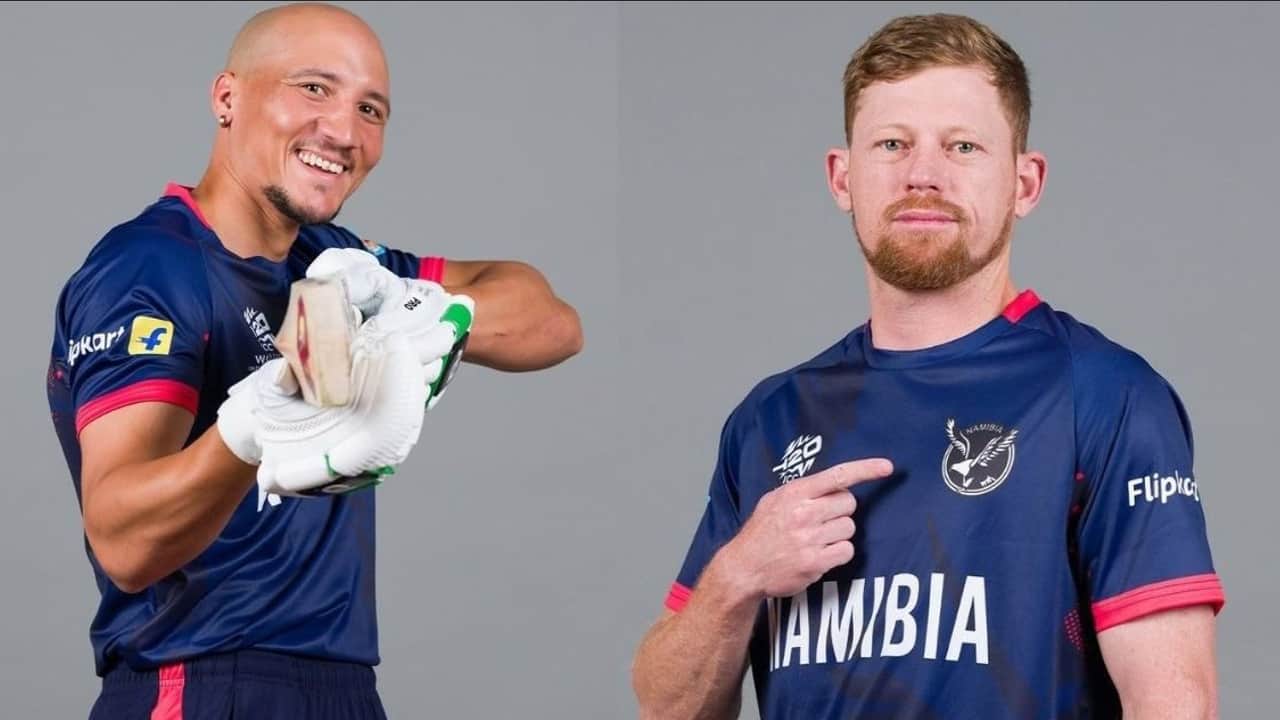
Australia stunned by Zimbabwe in Colombo
9 hours ago
Dates for Ireland's Nations League fixtures revealed
10 hours ago


Australia v Zimbabwe: T20 World Cup cricket - live
13 hours ago
Trump pardons 5 former NFL players
14 hours ago