LEGACY: England’s boys of 1966 - when football really did 'come home'
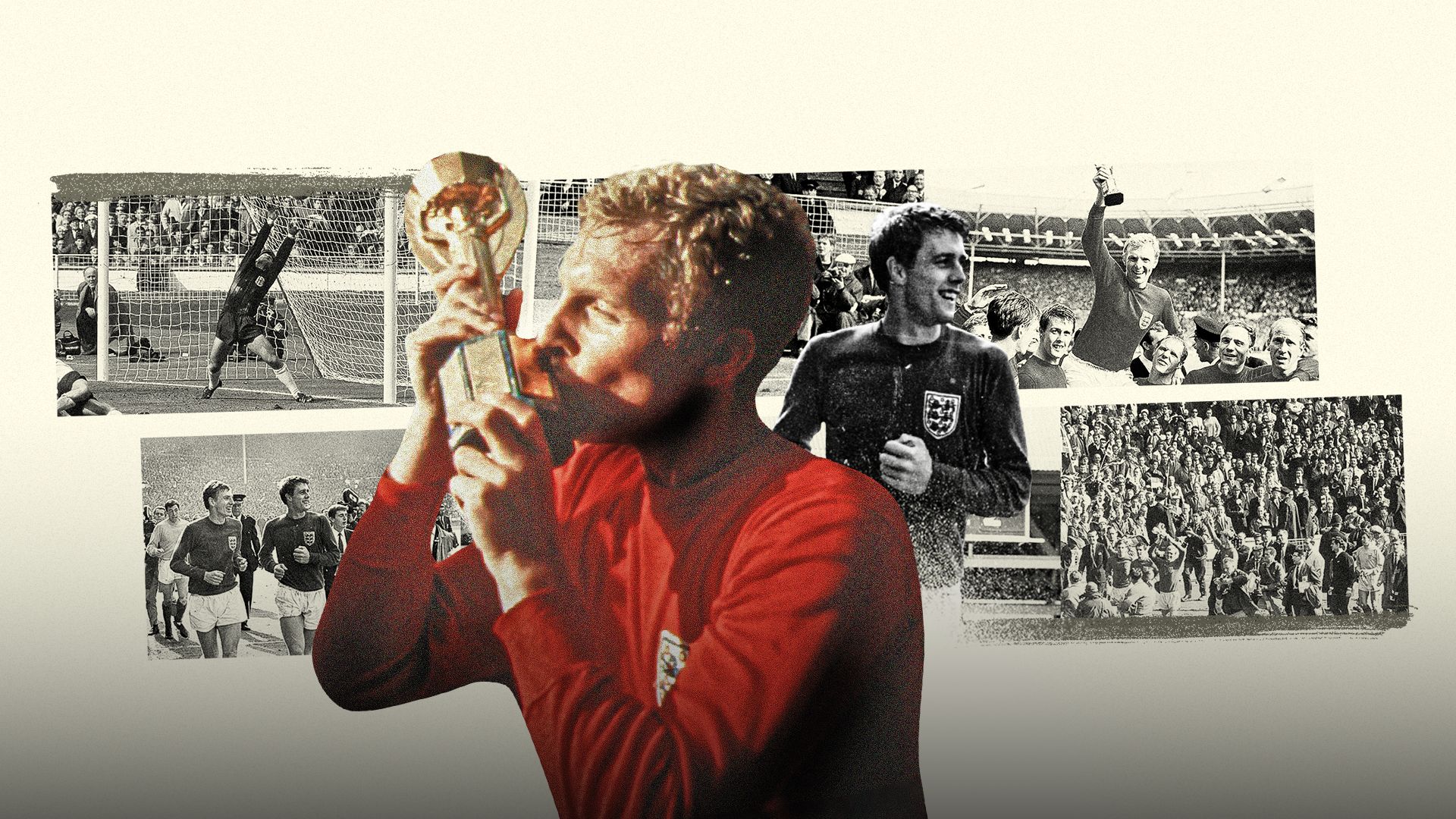
For a nation that invented football as we know it and brought it to many parts of the world, England initially showed very little interest in the World Cup. They did not enter the first three editions of the tournament as they had withdrawn from FIFA, before finally re-joining in time for the 1950 World Cup, turning up thinking they were going to win it. Instead they went home at the first hurdle after one of their most humiliating defeats ever, losing 1-0 to the United States.An even bigger embarrassment came three years later, when they were destroyed 6-3 by Hungary at Wembley. "Perhaps England, once the masters, can now learn from the pupils," said a boastful Ferenc Puskas. Playing for England that day was Stanley Matthews, the first ever winner of the Ballon d’Or. So too was Alf Ramsey, who had the misfortune to also be on the pitch in that first debacle against the U.S.A decade after losing the ‘Match of the Century’ to Hungary, Ramsey was named England boss, and the Football Association could not have picked a better man to revive their fortunes. Ramsey had previously taken over Ipswich Town while in the Third Division and taken them all the way to become First Division champions. His team had no star names but a relentless will to win and a sense of how to do it.Ramsey took that nous with him to the national team. When he was appointed, he vowed, "Even in the days when England had great players like Stanley Matthews and Tom Finney, the team would have been better with a rigid plan. Any plan must be adapted to the strengths and the weaknesses of the players."Ramsey built his England on a rock-solid defence that would not concede a goal at the 1966 World Cup until the 83rd minute of the semi-final against Portugal. But perhaps the best illustration of his pragmatism was deploying his star player, Bobby Charlton, to man-mark Franz Beckenbauer in the final.Ramsey was strict with his players, but they were fiercely loyal to him."On the field I’d have given my life for Alf Ramsey,” said midfielder Alan Ball, whose tireless running deep into extra-time in the final against West Germany was key to England’s triumph. Nobby Stiles, meanwhile claimed that he "went on a pitch prepared to, if necessary, to die there for him [Ramsey]."Despite only making the knockout stage twice in their four previous World Cups and never going further than the quarter-finals, Ramsey set out his stall by declaring early on that England were not just capable of lifting the World Cup, but were going to: "I believe we will win the World Cup. We have the ability, we have the determination, we have the strength. We have the personality, we have the character, and we have players with the temperament."That bold prediction was tested by a sorry showing in a tournament known as 'The Little World Cup' in 1964 in Rio de Janeiro, when England were thrashed 5-1 by Brazil and finished bottom of a mini-league also containing Portugal and Argentina. But confidence grew less than a year out from the tournament when England beat Spain 2-0 in a friendly at Santiago Bernabeu. From then on, Ramsey’s side were known as ‘The Wingless Wonders’, characterised by a 4-3-3 formation in which the coach eschewed traditional wide players in favour of packing the midfield.More significantly, England beat Spain without their star man and then-all-time top scorer, Jimmy Greaves, due to illness. Greaves was effectively un-droppable due to his status within the English game, but the result in Madrid gave the team a feeling that they were more likely to win the World Cup without a player who tended to follow his own rules rather than the coach’s instructions.They were thus dealt a blessing in disguise when Greaves injured his shin in the third group game against France in '66.The 1966 World Cup was rocked by two massive incidents before it even began, the first coming when African nations announced a boycott after FIFA declared the continent would not get a direct qualifying place. Then, the Jules Rimet trophy was stolen from a cabinet in Westminster.A massive police operation was launched, but in the end the trophy was found not by detectives, but by a dog named Pickles. The black and white collie sniffed out a package by a car while out for a walk in south London with owner Dave Corbett, who opened it to find the gleaning trophy inside, which he immediately brought to his local police station. When England were crowned champions, Corbett and his cunning canine were invited to the celebratory dinner.As would become a feature of future tournaments, England made an uninspiring start with a cagey 0-0 draw against Uruguay. They came alive in their second game against Mexico, though, with Bobby Charlton scoring with a trademark cannonball strike and Roger Hunt netting a tap-in in a 2-0 win.A double from Hunt gave them another 2-0 win over France, setting up a quarter-final tie with Argentina which would go down as one of the most violent games in World Cup history. There was no political ill-feeling between the two nations at the time as the Falklands dispute did not begin for another 16 years, but Argentina felt wronged days before the game kicked-off.The referees for the quarter-finals were due to be appointed at a meeting of delegates, but the Argentine representatives turned up late. When they eventually arrived, they were informed that German Rudolf Kreitlein would officiate the game. Their suspicions were aroused further when an English referee was appointed for the other last-eight tie between West Germany and Uruguay, which the Germans won 4-0 after three contentious decisions."The referee was totally biased, he gave everything to England," said Argentina’s captain Antonio Rattin, who was sent off in the first half for arguing with Kreitlein. "I think he wanted to send me off all along."Rattin refused to leave the pitch for seven minutes, and when he finally made way, he twisted the Union Jack on the corner flag and started insulting the crowd, who threw cans of beer at him.England wore the 10 men out in an attritional and hugely aggressive affair before Geoff Hurst - who came in for Greaves to make his first appearance at the tournament - eventually headed in the decisive goal, courtesy of a cross from his West Ham team-mate Martin Peters.When the full-time whistle came, Ramsey marched on to the pitch to forbid George Cohen from swapping shirts with Alberto Gonzalez, whom he referred to as an "animal". Tempers began to flare as Argentina’s players tried to force their way into the England dressing room and then threw a chair at the door. Roberto Ferrero subsequently attacked the referee while his team-mate Ermindo Onega spat in the face of the FIFA vice-president.Portugal, containing tournament top scorer Eusebio, were England’s semi-final opponents. It was a less fiery game than the previous round, but England brought the heat on the pitch, especially Bobby Charlton, who scored in each half, the second courtesy of a lay-off from Hurst. Between the two Charlton goals, Gordon Banks had denied Eusebio with a wonder save.Bobby’s older brother, Jack, had his say down the other end of the pitch, committing a deliberate handball to stop Portugal scoring. Eusebio converted the penalty, but England advanced to the final against West Germany.It was 21 years since the end of the Second World War, and while it was not exactly fresh in the players’ minds, it was hard to forget. Stiles, for example, had been born during a bombing raid of Manchester, and Peters had been evacuated while members of his wife’s family were killed by a bomb during The Blitz."The recent past was there, whether we liked it or not," recalled Hurst. "For us, for them, for the crowd."Hurst’s father-in-law was a paratrooper in the D-Day landings and he had a good feeling about the game, telling people around him that the striker was going to score a hat-trick. But England got off to a rough start when Ray Wilson headed a cross straight to the feet of Helmut Haller, who gave West Germany the lead.England did not panic and six minutes later, Hurst scored the first goal of his eventual treble courtesy of another West Ham connection, heading in a quickly-taken free-kick by captain Bobby Moore. Peters, who was nicknamed ‘The Ghost’ for his ability to appear out of nowhere, pounced after a Hurst shot deflected into the air to put England on the brink of victory, only for Germany to equalise in the 89th minute when Wolfgang Weber bundled the ball home during an almighty penalty box scramble.Ramsey had a simple but highly-effective message in the short break before extra-time: "You beat them in 90 minutes, now beat them again in 30."England retook the lead through Hurst with a goal that has forever been shrouded in controversy, as his thunderous strike blasted against the crossbar and onto the goal-line. Swiss referee Gottfried Dienst conferred with Soviet linesman Tofiq Bahramov before giving the goal. To this day, the rest of the world believes the ball did not cross the line. Hurst himself could not see as he was on the floor, but he believes the word of Hunt, who was right by the ball."Roger is certain, otherwise he’d follow up, not turn away," he said. "Instinct tells him it’s a goal. That’s always been good enough for me and always will be."There was no doubt about Hurst’s third goal, which came via another assist from Moore. The commentary from Kenneth Wolstenholme as Hurst whacked in the clincher has gone down in English folklore: "And here comes Hurst. Some people are on the pitch, they think it's all over. It is now!"England’s World Cup heroes were immortalised. A statue of West Ham’s trident of Peters, Moore and Hurst was erected outside Upton Park. Another bust of Moore was built when the renovated Wembley Stadium opened in 2000. Banks has a statue in Stoke, as does Ramsey in Ipswich.The architects of the country’s greatest triumph were not always looked after, however. The England squad were each given a bonus each of £1,000, equivalent to £16,000 in today’s money. By contrast, each player in Argentina’s 2022 World Cup winning squad earned a bonus of $500,000.Upon retirement, many players took up normal jobs away from football. Hurst went into insurance while Wilson became an undertaker. Eight of the players who played in the final made it to the 1970 World Cup in Mexico, where West Germany got their revenge by hauling their way back from 2-0 down in the quarter-finals to win 3-2 after extra-time. That was the beginning of the end for that generation of players, as England failed to qualify for the 1974 World Cup, leading to Ramsey being sacked.Captain Moore died of bowel cancer in 1993, aged just 51, when it was revealed that he had been diagnosed with testicular cancer two years before the World Cup, telling no one but his closest family. Six players, meanwhile, suffered from dementia, including Jack and Bobby Charlton, as did Ramsey.Bobby Charlton’s death in 2023 left Hurst as the only survivor of the team that played in the final, though the hat-trick hero did survive a heart attack in 2024.England failed to reach the 1978 World Cup, a successive failure after not making it to 1974. They did qualify for the 1982 tournament in Spain, but were knocked out in the second group stage.Plenty more pain was to come: Diego Maradona’s Hand of God in 1986; losing to West Germany on penalties in 1990 after Paul Gascoigne’s tears; failing to qualify for 1994; a penalty shootout defeat to Argentina in 1998 after David Beckham was sent off; David Seaman being lobbed by Ronaldinho in 2002; another agonising shootout defeat in 2006 at the hands of Portugal after Wayne Rooney’s red card and Cristiano Ronaldo’s wink; Frank Lampard’s ghost goal against Germany in 2010 (perhaps retribution for Hurst’s controversial strike); going out in the group stage in 2014; an unexpectedly brilliant display in 2018 ending in extra-time defeat to Croatia; and losing to France in 2022 after Harry Kane blasted a penalty into the sky.England’s adventures in European Championship have followed a similar pattern: shootout defeats in 1996, 2004 and 2012, a group-stage exit in 2000, failure to qualify in 2008 and an equally embarrassing exit to Iceland in 2016. Sir Gareth Southgate became the first manager since Ramsey to lead England to a major final in Euro 2020, but they fell at the last hurdle to Italy in yet another shootout defeat.The Three Lions reached the Euros final again in 2024 but were well beaten by Spain. As well as having the best results since Ramsey, Southgate is the coach that most closely resembled him, restoring success but above all hope and pride to the national team.England surprisingly tore up their playbook by appointing Thomas Tuchel in 2024, putting their faith in the serial-winning German’s ability to make the right moves in the highest-pressure moments to finally capitalise on the latest golden generation of players. But even if Tuchel takes England all the way in North America, he and his team will never truly emulate the boys of 1966.



Most Popular